生命周期
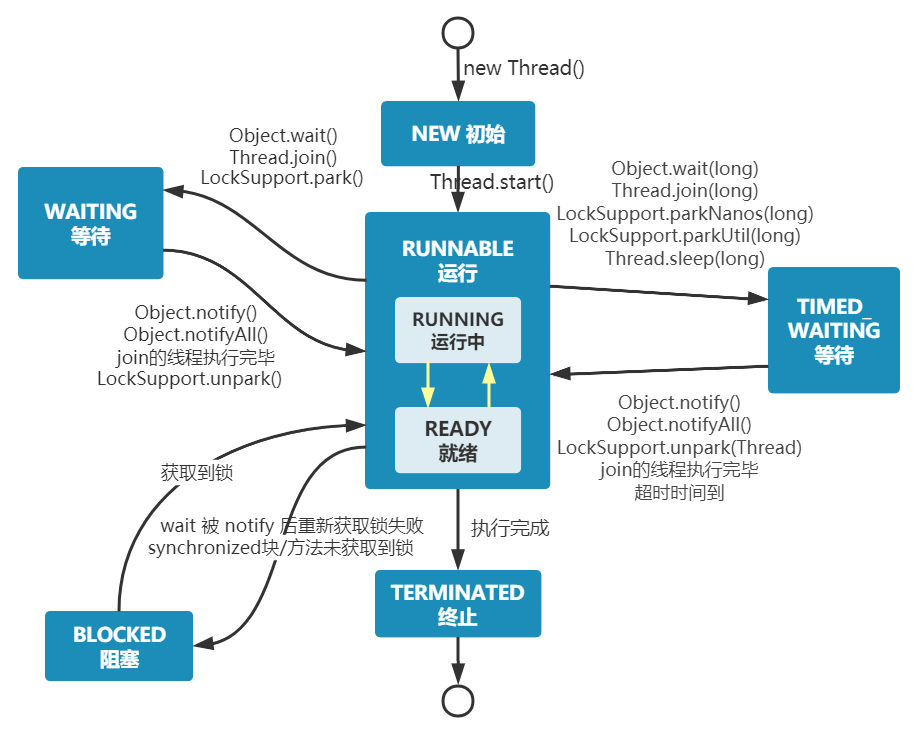
创建方式
-
extends Thread
-
implements Runnable
-
implements Callable
Callable<String> callable = () -> { return "hello world"; }; FutureTask<String> futureTask = new FutureTask<>(callable); Thread thread = new Thread(futureTask); thread.start(); -
线程池
run vs start
- start 启动线程
- run 直接执行
Thread#sleep vs Object#wait
Thread.join()
public static void main(String[] args) throws InterruptedException {
    Thread thread1 = new Thread(new Runnable() {
        @Override
        public void run() {
            try {
                Thread.sleep(10000);
            } catch (InterruptedException e) {
                e.printStackTrace();
            }
            System.out.println("Thread 1 running");
        }
    });

    thread1.start();
	// main 主线程等待 thread1 执行完成
	thread1.join();

    System.out.println("Main 1 running");
}
Thread.sleep(0)的作用
让线程主动释放CPU时间片, 让其他线程可以进行一次公平的争抢
Thread.isAlive()
- 判断线程是否存活
- 如果被锁, 比如
synchronized (t),t.isAlive()返回true